
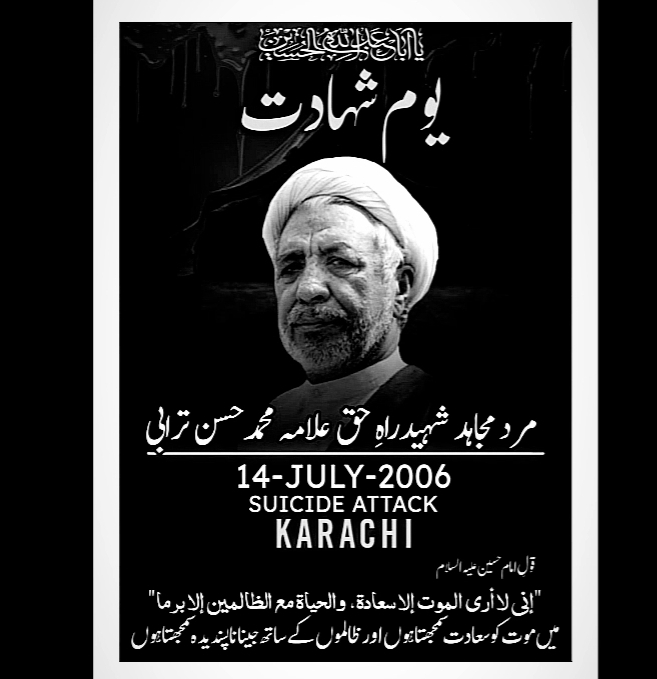
On July 14, 2025, the Shia community and admirers across Pakistan mark the 19th martyrdom anniversary of Allama Hasan Turabi, a revered Shia cleric and prominent leader of Tehrik-e-Jafaria Pakistan. Martyred in a tragic suicide attack in Karachi on July 14, 2006, Allama Turabi’s life and legacy continue to inspire millions, as evidenced by the viral videos circulating on social media platforms like Facebook, showcasing his fearless stand for religious rights and Muslim unity.
A Historic Stand Against Oppression
One of the most iconic moments of Allama Turabi’s legacy, currently trending online, is his leadership during a massive protest outside the Aiwan-e-Sadr (Presidential Palace) in Islamabad around 2004. During General Pervez Musharraf’s regime, the government imposed the Loudspeaker Act, restricting the use of loudspeakers in mosques and religious gatherings, particularly impacting Shia mourning ceremonies (majalis) and processions. This restriction was perceived as an attack on the Shia community’s religious freedom, as loudspeakers are integral to azadari (mourning rituals for Imam Hussain).
In response, Allama Turabi mobilized approximately 15,000 scholars and activists from across Pakistan to protest outside the Aiwan-e-Sadr. Viral videos from this event capture his powerful address, where he boldly warned the government to lift the ban and release Allama Syed Sajid Ali Naqvi, the leader of Tehrik-e-Jafaria, who was reportedly arrested during this period. In a resounding declaration, he stated that failure to comply would turn the Aiwan-e-Sadr into an “Imambargah.” During the protest, Allama Turabi led the crowd in reciting the iconic noha (elegy), “Sada Rahega Hussain Ka Gham, Na Ruk Saka Hai Na Ruk Sakega” (The grief of Hussain will endure forever, it has never stopped nor will it ever). This act of defiance, amplified through loudspeakers, became a symbol of resistance and the unyielding spirit of azadari.
A Lesson in Resilience
The viral videos, shared by different Shia individuals and organisations pages, highlight Allama Turabi’s fearless leadership and his role in galvanizing the Shia community. The captions accompanying these videos emphasize the Quranic verse (Surah An-Nisa, 4:148), Allah does not like the public utterance of evil words, except by one who has been wronged, underscoring the legitimacy of raising one’s voice against oppression. These posts also serve as a reminder to those who advocate for limiting loudspeaker use in religious practices, asserting that the mourning of Imam Hussain is a sacred tradition that cannot be silenced.
Allama Turabi’s protest was not just a stand against a policy but a powerful demonstration of unity and resilience. The captions note that this event, described as a “historic power show,” underscores the importance of a strong community leadership (markaz) in safeguarding the rights and dignity of the Shia community.
A Martyr’s Enduring Legacy
Allama Hasan Turabi’s martyrdom in 2006 was a profound loss, yet his legacy endures through his unwavering commitment to justice, unity, and the preservation of Shia religious practices. His leadership during the Aiwan-e-Sadr protest remains a pivotal moment, reflecting his courage to challenge oppressive policies and rally thousands in defense of their faith. The viral videos circulating today, including rare footage of his noha recitation and speeches, continue to inspire and awaken the spirit of resistance and devotion among the faithful.
As we commemorate his 19th martyrdom anniversary, the Shia community and supporters are urged to recite Surah Al-Fatiha for Allama Turabi, other martyrs of the Shia nation, and figures like Syed Ali Muhammad Rizvi (Sache Bhai), a renowned noha reciter mentioned in the video captions. These tributes call for continuing Allama Turabi’s mission of fostering Muslim unity and upholding the eternal message of Imam Hussain’s sacrifice.
Conclusion
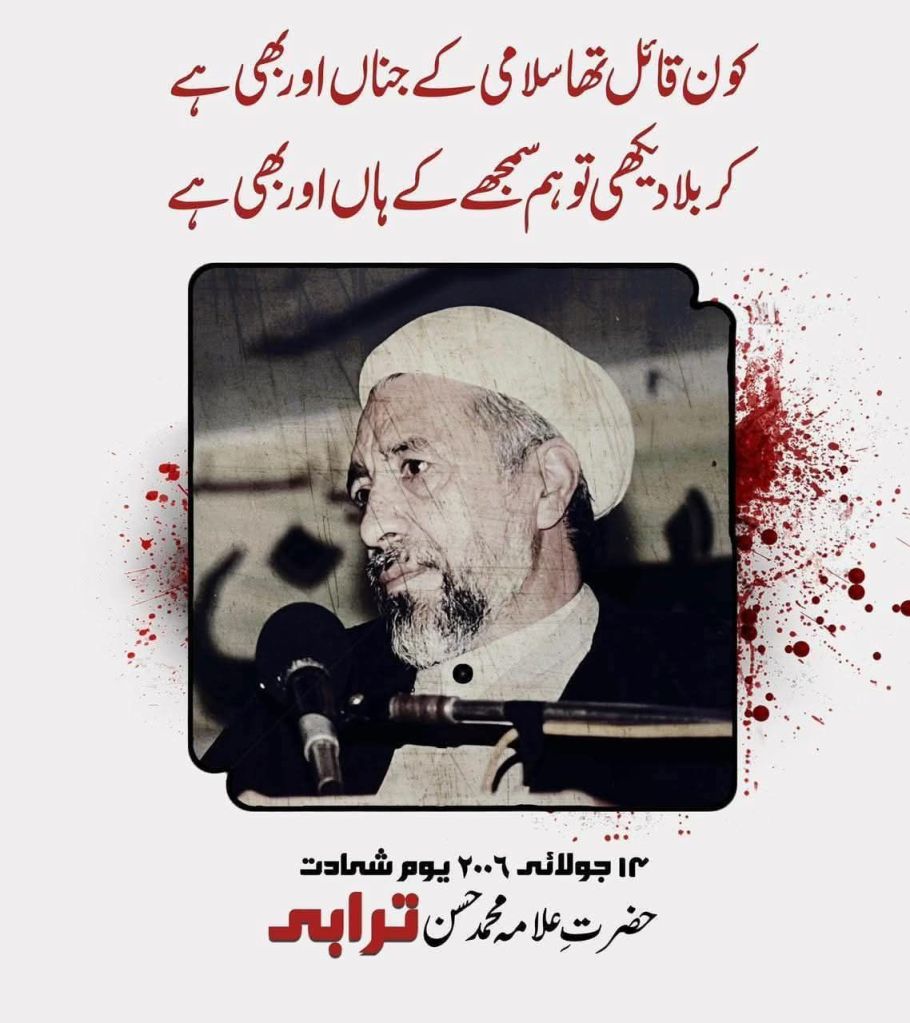
Allama Hasan Turabi’s life and martyrdom remind us of the power of standing firm in the face of adversity. His historic protest at the Aiwan-e-Sadr, now immortalized in viral videos, serves as a lesson in courage, unity, and the unbreakable spirit of azadari. As his legacy resonates through these tributes, let us honor his memory by striving for justice, harmony, and the preservation of religious freedoms.
Hastings:
#AllamaHasanTurabi #MartyrdomAnniversary #HussainKaGham
 Mubashir Mehdi